- Our California office it's now
- 13:56 PM(Fri) - We Are Open
- Tel: 1-909-988-8885 Toll free : 1-855-325-2726 (USA & CANADA)
- Whatsapp: Website Line : 1-909-914-8063
- info@alljapantours.comFollow Us :


- Monday to Friday 8:30AM - 5:30PM (PST) Saturday 9:00AM - 3:00PM (PST)
- CONTACT US
UNESCO World Heritage Sites
Temples
Shrines
Castles
Gardens
Historic Towns and Districts
Sacred and Pilgrimage Sites
Pottery Towns
Museums
Festivals
Manga and Anime
Onsen
Nature
Natural Sceneries
Wildlife
Cherry blossoms
Autumn Leaves
Flowers
Theme Parks
Geisha
Sumo
Ninja
Samurai
Traditional Sports
Traditional Performing Arts
Traditional Culture Experiences
Food
Drinks
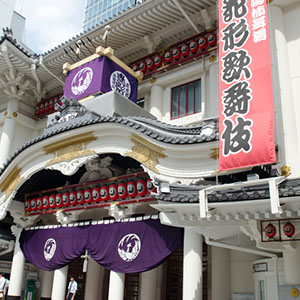
Kabuki is a traditional form of theatre that originated in the Edo Period. In Japan, it is recognized as one of the
three major classical forms of theatre including noh and bunraku.
Kabuki has captured the hearts and minds of audiences since the beginning of the 17th century to present
day. It is an art form rich in showmanship.
It is renowned for its appearance involving impressive costumes, striking makeup, eccentric wigs, and not to
mention, the exaggerated actions performed by the actors.
Music and dance are skillfully applied, bringing life to the characters from Japan’s past, both real and
imaginary. Plays can range from realistic tragic dramas to thrilling adventure stories. Plots are usually based
on historical events, moral conflicts, love stories, warm hearted dramas, tales of tragedy or conspiracy, and
many other well known stories.
The Kabuki is staged is equipped with dynamic gadgets such as revolving platforms and trap doors, used for
actors to appear and disappear. Additionally, the Kabuki stage has a footbridge (hanamichi) that leads into the
audience allowing dramatic entrances and exits.
Kabuki theatre has important characteristics like its own music, costumes, props and gadgets, and uses
specific language and acting styles. All of these elements combined produce an astounding and captivating
performance.
Originally, kabuki used to involve both male and female actors and was popular among common people..
However, later during the Edo Period, Tokugawa Shogunate restricted women to participate. Since then, all
the actors are played by men, a tradition that has remained till present day. Therefore, there are male actors
that specialize in playing female role (onnagata).
All the actors play the roles of warriors, thieves, as well as respectable ladies, and prostitutes. They have
always been worshipped by an adoring audience who may shout out the actors’ names while on stage. All
kabuki actors have a hereditary stage name (yago). It is an accepted practice for people in the audience to
shout their favorite actor’s names during critical and appropriate times to show support.
Stagehands called kurogo will sometimes appear on the stage, usually dressed in all black. Their role has no
direct connection to the story, they are there to assist actors with props or other help to make the act appear
seamless. They are treated invisible or non existent to the audience.
Mainstream kabuki use to be performed at selected venues in big cities like Edo (present day Tokyo), Osaka,
and Kyoto in the olden days.
Today, you can enjoy kabuki plays in selected theaters with Western-style seats. There are even earphones
provided to listen to an English translation.
Through all these modern developments in the past century, Japan’s culture from the past has not been lost.
Buy tickets to enjoy a rich play with a one of a kind venture to the past. There are well-known venues located
in Tokyo, Kyoto, Osaka, Fukuoka, and more.
Kabuki is the most popular traditional style of Japanese drama. It has been named as a UNESCO Intangible
Cultural Heritage.