- Our California office it's now
- 14:02 PM(Fri) - We Are Open
- Tel: 1-909-988-8885 Toll free : 1-855-325-2726 (USA & CANADA)
- Whatsapp: Website Line : 1-909-914-8063
- info@alljapantours.comFollow Us :


- Monday to Friday 8:30AM - 5:30PM (PST) Saturday 9:00AM - 3:00PM (PST)
- CONTACT US
Popular Destinations in Japan
Northern Japan
Sapporo
Hiraizumi
Matsushima
Around Tokyo
Nikko
Ashikaga
Central Tokyo
Northern Tokyo
Western Tokyo
Southern Tokyo
Yokohama
Kamakura
Hakone
Central Japan
Mt Fuji
Matsumoto
Nagano City
Takayama
Shirakawa-go
Kanazawa
Kansai
Kyoto City
Nara City
Osaka City
Kobe
Mt Koya (Koyasan)
Himeji
Southern Japan
Matsue
Hiroshima City
Miyajima Island
Kurashiki
Naoshima Island
Takamatsu
Nagasaki
Beppu
Takachiho
Fukushima Prefecture
Fukushima Prefecture is the third largest prefecture based on land mass and is an area mostly covered with mountains.
Fukushima Prefecture is located on the end of the Tohoku Region with a coastal border facing the Pacific Ocean. It can be divided into three areas, which are Hamadori, Nakadori, and Aizu. Fukushima produces a variety of fruits to the point of being dubbed the “kingdom of fruit.” The harvest season is the best time to try the sweet nectar of various fruits like cherries, apples, peaches, persimmons, pears, and strawberries. Fukushima was also known as one of the major producers of rice before the nuclear incident of 2011. Since there are many varying climates in Fukushima due to its mountainous landscape the cherry blossom season lasts for several weeks. To the east of Koriyama is an amazing specimen of a 1000-year-old weeping cherry blossom tree, which is named Miharu Takizakura. Fukushima Prefecture is a popular destination for onsens (hot springs) as there are over 130 located all over the area. Some of the well-known ones like Iizaka, Yumoto, and Higashiyama onsen attract many tourists to their respective locations.
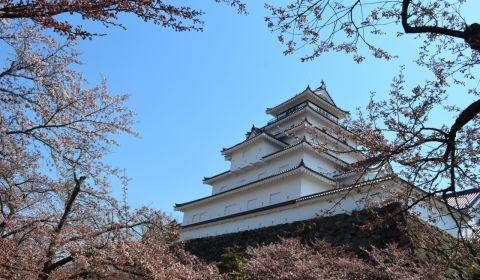
Fukushima has a long history of powerful samurai clans being placed in governing positions for many generations. One of the most notable clans is the Aizu and there is a samurai district in Fukushima Prefecture where they once resided in. There is evidence of inhabitants dating back to the Jomon period in the area. When rice was introduced to Japan during the Yayoi Period it spread rapidly. There are remains of rice paddies found near ancient burial mounds. In an expanse of over 50 kilometers there 15 tumulus (burial mounds) found throughout Fukushima Prefecture. In the Kamakura Period, Minamoto no Yoritomo was the first feudal Shogun and placed three samurai families in the Mutsu Province. The Aizu (later called Ashina), Date and Soma Clan had the most influence in the area and it continued to be that way until the Azuchi-Momoyama Period also known as the Sengoku Period. Intense fighting in the region led to the frequent change of governing clans.
Stability in the Fukushima area was reached when Tokugawa Ieyasu united the country then put the Aizu and Shirakawa Clan in charge of governing northern Japan. Masanori Hoshina of the Aizu was closely affiliated with the Tokugawa Shogunate and supported the feudal government throughout the Edo Period. For 9 consecutive generations the Aizu Clan was loyal to the Shogunate until it was overthrown in the Meiji Era. There was a political incident in 1882 that started with Mishima Michitsune’s appointment as governor of Fukushima Prefecture. It involved Mishima receiving three secret orders that would destroy the Jiyuto, develop his own party and build certain roads that would force the people to front the bill. When the Jiyuto organized against the road building by using lawsuits and boycotts, the government acted out plans that attacked the activists while they slept. It is also became known as the Shimzuya Jiken.