Let us help you. Please tell us more about your interests. We will send some suggestions based on your needs.
Fully Escorted
Local Cuisine
Handpicked Hotels
Public Transportation
No Options Sold
12 days 11 nights
fromUSD $5865.00 (Limited to 13 guests)
Single Supplement: USD $950.00
The price is per person, based on twin or triple room occupancy
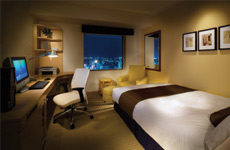
For single travelers, this tour has a single supplement. This guarantees a single room
Prices are excluding international flights
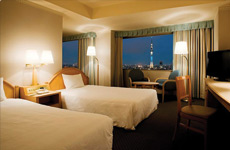
Single Room
Single room types are rooms for
single room occupants.
One person will be occupying the
hotel room throughout the tour.
Twin Room
Twin room types are rooms set for two people who will occupy one room, but will have two separate beds.
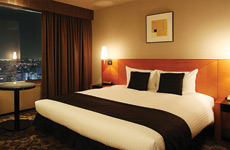
Double Room
A double room is a room that has one bed for two people to share.
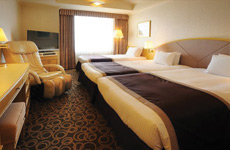
Triple Room
A triple room is one room where three people may share the same room. It has three separate beds.
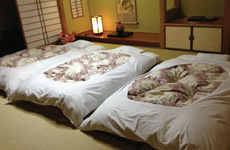
Japanese Style Room
A Japanese-style room traditionally does not have a western-style bed, it is a tatami floor room with futon bedding. However, if you prefer a western-style bed, you may request one though we cannot guarantee it.
Please note: If you would like to request neighboring rooms next to your traveling companions, you and your traveling companions must have the same room types in order to be next to each other. For example, if you have requested a double room, but your traveling companions have requested a twin, or triple room, then neighboring rooms cannot be accommodated. However, if both you and your traveling companions match in room type, then neighboring rooms will likely be arranged for your convenience.
Kyushu is one of Japan’s most compelling
regions, and once you arrive, it is easy to
understand why. This southern island is defined
by powerful volcanic landscapes, sweeping
calderas, and steaming hot springs that shape
both the scenery and daily life. It is a side of
Japan that feels raw, dramatic, and deeply
connected to nature.
Your journey begins in Osaka before crossing
the Seto Inland Sea to reach Kyushu, a region
often linked to Japan’s earliest legends. In
Takachiho, ancient creation myths are still
honored through sacred dance and shrine
traditions, giving you a rare opportunity to
experience stories that have shaped the
country’s identity for centuries.
Mount Aso’s caldera is one of the largest in the
world, and standing at its edge is unforgettable.
The wide grasslands of Aso Kuju National Park
has open views and a sense of scale that few
places in Japan can match. Further south,
Yakushima presents a completely different
terrain. Its ancient cedar forests, some trees
over a thousand years old, create a natural
environment that feels far removed from
modern life. Wildlife thrives here, and the island
remains remarkably protected.
Kyushu’s geothermal energy provides countless
onsen hot springs, inviting you to relax in
mineral rich waters that have long been part of
local tradition. The journey concludes in
Nagasaki, a port city with a distinct
international history and a resilient spirit that
adds depth and meaning to the overall
experience.
Throughout the tour, you stay in traditional inns
and comfortable hotels, enjoying regional
cuisine prepared with fresh, local ingredients.
This is not just a visit to Kyushu. It is an
opportunity to experience a region where
nature, history, and culture come together in
powerful ways.
Note: this is an intermediate rated
hiking trip with some steady steep ascents and
hikes around 1-3 hours.
Activity Level: Moderate
Moderate-level tours typically feature dedicated
days of trail walking, with some days lasting
over four hours and including ascents and/or
descents.
Walking routes are either paved or along well-
maintained dirt trails, and require no particular
map-reading ability or route-finding skills.
Accommodations
This itinerary contains overnight stays at
Western Hotels, Ryokans, and Minshukus.
Ryokans and Minshukus are more traditional
accommodations, with a more casual
hospitality than you will find at a hotel. At both
a Ryokan and a Minshuku, you will stay in a
simply furnished room and sleep on a futon,
which is laid on a tatami mat.
Some Ryokans may have private bathrooms
attached to your room, but others only have
public bathrooms used by all the guests.
Minshukus usually offer only a public bathroom
– meaning either a smaller bathroom used one
guest at a time, or larger bathrooms separated
by gender (male & female), and designed to be
used by multiple guests at once.
2027
| Start Date | End Date | Twin/Triple | Start City | End City | Style | Save | Status |
|---|
Please Note:
All prices are per person, based on twin (double
on request) or triple occupancy.
International flights are not included on our
tours - this allows you the flexibility to choose
your own departure and get the best value for
your money!
We can arrange
international flights for US customers if needed,
please ask for details.
A 20% deposit is required to hold the space at time of booking and final payment is due 2 months prior to departure. At least 4 passengers minimum are required to guarantee the tour’s departure. Booked passengers will be informed 3 months before the starting date if the tour is not guaranteed, and they will have the option to either cancel and refund the amount already paid, or transfer the payment to another tour.
Transport
Public transportation
Arrival Departure Airports
For arrivals at Osaka Kansai Airport (KIX), this tour starts in Osaka and ends in Nagasaki, with departures at Nagasaki Airport (NGS).
Vegetarian or special meals can be arranged.
Meet and Greet
Airport meet and greet and arrival airport transfer are NOT included, but we will provide with full instructions in advance.
Click here for detailed itinerary
Tour schedule and prices subject to change without notice
Meet your guide and other group members at the tour hotel in central Ōsaka in the evening. There will be a welcome dinner at a local restaurant.
Western-style hotel
Today we explore the Tennōji area of Osaka, where some of the city’s oldest history meets unmistakable local character. Founded in the sixth century, Shitennōji is one of Japan’s oldest Buddhist temples and a cornerstone of early Japanese Buddhism. Established by Prince Shotoku, the temple has been rebuilt over the centuries but still follows its original layout. Its five story pagoda rises above the grounds, and the main hall offers a quiet space for reflection in the middle of the city. We will also visit Tsutenkaku Tower, one of Osaka’s most recognizable landmarks. Standing in the nostalgic Shinsekai district, the tower reflects the city’s lively, down to earth spirit. The surrounding streets are known for their retro atmosphere and local eateries, giving a look into everyday Osaka life. In the evening, we head to Osaka Port to board our overnight ferry across the Seto Inland Sea to Beppu. On board, we have private cabins for a comfortable night’s rest, and there is even a Japanese style bath where you can relax as the ship sails through calm island dotted waters. It is a smooth and uniquely Japanese way to travel between regions.
Ferry Cabin
Arriving in Beppu by sea is a memorable way to experience one of Japan’s most famous hot spring cities. As the ship approaches the harbor, you can see steam rising across town from hundreds of natural hot springs. With mountains behind it and the bay in front, Beppu has a dramatic setting shaped by powerful geothermal activity. From Beppu, we travel by bus into the mountains to Kurokawa Onsen, a small hot spring village known for its traditional atmosphere. Wooden buildings, narrow lanes, and riverside paths give the town a timeless feel. After checking into our ryokan, you will have time to soak in one of the village’s mineral rich hot spring baths, many set outdoors and surrounded by forest scenery. In the evening, we enjoy a multicourse dinner at the inn. Each dish highlights seasonal ingredients and regional specialties, carefully prepared and beautifully presented for a relaxed and authentic dining experience.
Onsen Ryokan (Japanese-style hotel)
From Kurokawa Onsen, we travel by private chartered coach to Takachiho. If the weather is clear, we will have sweeping views of Mount Aso along the way. Mount Aso is not a single peak but a group of five volcanoes set within one of the largest calderas in the world. Mount Takadake and Mount Nakadake rise prominently above the landscape, and these peaks have been revered since ancient times as sacred mountains. At Aso, a local guide leads us across the wide grasslands that fill the caldera. These open fields are not accidental. They have been carefully maintained for generations through controlled burning and traditional grazing. Walking along gentle paths, we take in expansive views, seasonal wildflowers, and the distinct beauty of this highland environment. You will also learn how local communities continue to manage and protect this environment so it can be preserved for the future. We then continue to the town of Takachiho, where we will stay for the next two nights.
Japanese-style hotel
After breakfast, we visit Ama no Iwato Shrine,
known as Heaven’s Rock Cave. According to
Japanese mythology, this is the cave where the
sun goddess Amaterasu hid herself, plunging
the world into darkness. The shrine stands in a
quiet forested setting along the river, and the
sacred cave across the water remains an
important place of worship. It is one of the most
significant sites connected to Japan’s creation
story. We then continue to Takachiho Gorge,
where sheer basalt cliffs line a narrow river
below. The unusual rock formations were
shaped by ancient volcanic eruptions and over
time became woven into local folklore and the
national creation myth. We take a short walk
along the gorge to appreciate the scenery
before stopping for lunch at a small local
teahouse. After dinner at our ryokan, we visit
Takachiho Shrine to watch yokagura, a
traditional sacred dance performance. These
dances recount the myth of Japan’s creation
through music, masks, and storytelling, offering
a meaningful cultural experience rooted in
centuries of tradition.
Walking distance: 6 km / 3.75 mi
Time required: 2 hours
Ryokan (traditional Japanese inn)
Leaving Takachiho, we travel to Kumamoto to visit Kumamoto Castle, considered one of Japan’s great historic castles. Originally built in the early seventeenth century, it is known for its impressive stone walls and defensive design. Despite damage from the 2016 earthquake, much of the castle has been carefully restored, and it remains a powerful symbol of the region’s resilience and samurai heritage. After lunch, we continue south to Kagoshima. The city sits along Kagoshima Bay with Sakurajima, one of Japan’s most active volcanoes, rising dramatically across the water. Its constant presence gives the city a striking natural backdrop. We visit Sengan en, the elegant villa and gardens of the Shimazu Clan, who ruled this area for centuries. The landscaped grounds use Sakurajima as a natural extension of the garden design, blending scenery and architecture beautifully. Kagoshima has a culture and cuisine that feel distinct from other parts of Japan. Shochu, often made from sweet potato, is more popular here than sake. Local specialties include tender kurobuta pork, a prized Berkshire breed, and freshly grilled bonito skipjack tuna, reflecting the region’s strong agricultural and coastal traditions.
Western-style Hotel
From Kagoshima, we take a ferry across the water to Yakushima Island, a designated UNESCO World Heritage Site and one of Japan’s most remarkable natural destinations. As the island comes into view, its steep mountains rise sharply from the sea, setting the tone for what feels like a completely different world. While small fishing communities line the coast, the island’s interior is dense, wild, and carefully protected. Yakushima is best known for its ancient cedar trees called yakusugi, some estimated to be more than a thousand years old. These massive trees, with their twisted trunks and thick roots, stand in moss covered forests that stay lush and green year round due to the island’s heavy rainfall. Walking here is not just scenic, it is immersive. The air is cool and damp, the forest floor soft underfoot, and every turn reveals layers of deep green. Along the coast, the landscape shifts dramatically. Rocky shores, quiet beaches, and seaside hot springs offer open ocean views and a chance to relax after a day of hiking. Yakushima is not polished or overdeveloped. It is raw, powerful, and deeply memorable.
Western-style hotel
Today we spend a full day exploring Yakushima.
We hike into the island’s interior, walking
through ancient forest among towering
yakusugi cedar trees. Some of these trees are
estimated to be more than a thousand years
old, with thick, twisted trunks and roots that
grip the moss covered ground. If we are
fortunate, we may spot Yakushima macaques
moving through the trees or resting along the
trails. The center of the island is a temperate
rainforest, shaped by heavy rainfall and
protected for generations. Mount Miyanoura,
the highest peak on Yakushima, is also the
tallest mountain in southern Japan, adding to
the island’s dramatic landscape. Because
development has been kept to a minimum, the
ecosystem remains intact and remarkably
diverse. After our hike, we return by local bus to
our hotel to rest and reflect on the day.
Walking distance: 3 km / 1.9 mi
Time required: 3 hours
Western-style hotel
On our third day on Yakushima, we explore the island by private coach, allowing us to see a wider range of its coastal and forest terrain. We begin with a stop at one of Yakushima’s beautiful beaches, where clear water meets rugged shoreline and the mountains rise in the distance. We then travel along the Seibu Rindo Forest Path, one of the most untouched areas of the island. This protected coastal forest is home to yakuzaru macaques and yakushika deer, which often move freely along the road and through the trees. The setting feels wild and unspoiled, with a rare chance to observe wildlife in its natural habitat. We also visit one of Japan’s most remarkable seaside hot springs, built directly into the rocks and washed by the ocean at high tide. It is a simple but powerful setting, shaped entirely by nature. After lunch, we take a short walk along a forest trail to reach a hidden waterfall, a quiet and refreshing end to the day’s exploration.
Western-style hotel
Leaving Yakushima by high speed ferry, we return to Kagoshima and board the bullet train for Nagasaki. The journey is smooth and efficient, carrying us north through Kyushu’s changing environment. Nagasaki holds a unique place in Japanese history. During Japan’s 250 year period of government controlled isolation, it was one of the only ports permitted to engage in foreign trade, primarily with the Dutch and Chinese. This exchange shaped the city’s culture, architecture, and cuisine in ways still visible today. Nagasaki is also known worldwide as the site of the second atomic bombing in 1945, an event that profoundly shaped its identity and message of peace. Today, Nagasaki is a vibrant coastal city that balances its modern energy with deep historical reflection. Its waterfront, historic districts, and international influences create an atmosphere unlike anywhere else in Japan.
Western-style hotel
This morning we visit Dejima, once a small artificial island built in Nagasaki Harbor to house Dutch traders during Japan’s long period of isolation. For more than two centuries, Dejima was one of the only gateways between Japan and the outside world. Foreign merchants were not permitted to step onto the mainland, and their lives were carefully regulated within this confined space. Today, Dejima has been thoughtfully restored, and you can walk through reconstructed buildings that reflect what life was like during this unique chapter in Japan’s history. We then visit Sofuku ji Temple, founded in the seventeenth century by Chinese settlers. The temple’s architecture reflects strong Chinese influences, with bold colors and distinctive design details that set it apart from many other temples in Japan. It is a reminder of Nagasaki’s long history as a port city shaped by international exchange. Later, there will be free time to relax, explore at your own pace, or shop for souvenirs. In the evening, we gather for a farewell dinner to reflect on the journey and celebrate the experiences we have shared together.
Western-style hotel
Our tour ends after breakfast at our hotel in Nagasaki. Your guide will offer advice on your journey to the airport for your homeward flight, or on onward travel in Japan if you are extending your stay.
PLEASE NOTE: These are the hotels All Japan Tours generally uses on the touring styles and regions shown. There is no guarantee that you will stay in the lodgings listed on the website. We encourage you to check your travel documentation for confirmation of the exact accommodation you will be staying in.
Destinations
Osaka / Beppu / Kurosawa Onsen / Mount Aso / Takachiho / Kumamoto / Kagoshima / Yakushima / Nagasaki
Lorem Ipsum is simply dummy text of the printing and typesetting industry. Lorem Ipsum has been the industry's standard dummy text ever since the 1500s, when an unknown printer took a galley of type and scrambled it to make a type specimen book.
Planned by experts, based on seasonal favorites and must-see sites.
Choose your style and split cost with other passengers
Chosen by our experienced staff
Guide is available to you 24/7 and sleeps in the same hotel
Learn to create your own Sushi, meet a geisha or maiko, and more
Meet locals and visit rural areas of Japan you might miss on other tours
| Group Tour Style | Budget | Deluxe | Deluxe-Plus | Signature | Active |
|---|---|---|---|---|---|
| < View Tours | < View Tours | < View Tours | < View Tours | < View Tours | |
| Feature | Our Budget Tours are designed for our guests who are on a limited budget. Explore the must-see sights and enjoy a hassle-free trip to Japan at an affordable price. | Sample all Japan has to offer, from unique locales to must see tourist attractions. Our Deluxe Tours are fully guided, and use our luxury coaches for your convenience and comfort. | Experience Japanese culture at a slower pace, and with a smaller group size than our deluxe tours. Stay in each city longer so you can soak in the culture and fully appreciate the destinations. | Enjoy upgraded hotels, a slower pace, and a smaller group size for a more intimate experience. Access to a wide range of unique activities that immerse you in authentic Japanese culture. | Explore Japan off the beaten path via Japanese public transportation, walking, hiking, cycling and more. Take more time to enjoy local experiences and picturesque landscape. |
| Advantage | Our most cost-effective way to see the highlights of Japan while staying in budget-friendly accommodations. If you would like to have a set of quick stops to sample the must-see sights of Japan, or if you plan to explore Japan on your own but would like to take a short trip to learn about Japan before your self-guided journeys, these are the tours for you. | Our most popular tours for everyone. Fully-escorted - the most hassle-free way to visit Japan for the best value. From Hokkaido to Kyushu, the duration of our Deluxe Tours range from 5 to 27 days. Whether you want to see the best of Japan in a shorter time, or take your time in each city, you will find a tour package that suits your preferences. | Smaller group sizes enable our guests to access more of Japanese culture and traditions. Our Deluxe-Plus Tours are carefully balanced for you to discover the unique Japanese culture, history, arts, food and spectacular scenery Japan has. If you love Japan and want to appreciate the best of everything Japan can offer, these are the tours for you. | Dive into the cultural aspects of Japan at a more leisurely pace. Enjoy more than just sightseeing. All of our Signature Small Group Tours feature a wide range of cultural experiences through interaction with the people and places that represent all that is authentic about the destination. Get an alternative, more in-depth understanding of Japanese culture and art. | Our Active Small Group Tours combine the best cultural locations with off-the-beaten-path destinations via Japanese public transportation. Discover the country of Japan the way the locals do and see Japan from a different angle. A focus on getting away from the crowds and into the real Japan, see the diversity of Japan’s countryside unfold before your eyes. |
| Group Size | 20 to 45 people | 10 to 35 people | 6 to 24 people | 4 to 16 people | 4 to 13 people |
| Fully-escorted | Comprehensively escorted by AJT's professional English speaking tour guide | Your guides are local experts and residents of the city you are visiting, they do not always escort the group when traveling between cities | |||
| Pace | Fast pace to see as much as possible while in Japan | Perfect pace to see as much as possible while in Japan | More leisurely pace to soak in and fully appreciate the destinations, plus free time to explore on your own | ||
| Airport Transfers | Airport transfers are NOT included unless otherwise specified | Airport transfers are included* (If no options are taken: hotels are not requested to be changed and passengers use the correct airports) | Airport transfers are included if arriving on the first day of the tour and returning on the last day of the tour | Private airport transfers are included if arriving on the first day of the tour and returning on the last day of the tour | Airport transfers are NOT included unless otherwise specified |
| Transfer between cities | Transfer between cities via private coach and Shinkansen (bullet train), depending on the itinerary | Transfer between cities via private coach and first class Shinkansen (bullet train), depending on the itinerary | Transfer between cities via Shinkansen (bullet train) or express train. Private minivans are also used occasionally where public transport is not available or practical | ||
| Sightseeing | Sightseeing by private coach with an escorted guide | Sightseeing by private coach and public transportation with an escorted guide | Sightseeing via public transportation (local train, subway & local bus) with local guides | ||
| Admission fees and activities | All entry fees to sites and activities listed in the itinerary are included | ||||
| Luggage Transfers | Luggage transfers by private coach from hotel to hotel, plus separate luggage transfers are included on select tours | Separate luggage transfers are included | |||
| Meals | Breakfast every morning, plus meals as indicated (vegetarian or special meals can be arranged) | ||||
| Accommodation | Carefully-selected budget hotels and ryokans | Carefully-selected superior/deluxe hotels and ryokans | Carefully-selected deluxe/boutique hotels and ryokans | Carefully-selected deluxe/luxury hotels and ryokans | Accommodations range from local Japanese inns (minshuku) to budget hotels, to superior/deluxe hotels depending on the tour and destination |
| Ages | 4 years old and above | 6 years old and above | |||
| Health & Activity | In order to enjoy our tour, you should be able to walk reasonable distances, often over unpaved and uneven surfaces. Some of the most memorable sightseeing activities can only be accomplished on foot. Wheelchairs can be arranged upon request. However, we regret that we’re unable to provide individual assistance to guests with walking difficulties or other personal needs. Guests requiring such individualized assistance must be accompanied by an able-bodied companion who can provide it. | These tours are tailored to the energetic traveler; guests should feel comfortable walking from 4 to 10 miles a day depending on the tour and destination. | |||