Let us help you. Please tell us more about your interests. We will send some suggestions based on your needs.
Single Room
Single room types are rooms for
single room occupants.
One person will be occupying the
hotel room throughout the tour.
Twin Room
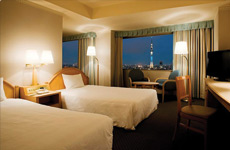
Twin room types are rooms set for two people who will occupy one room, but will have two separate beds.
Double Room
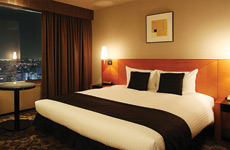
A double room is a room that has one bed for two people to share.
Triple Room
A triple room is one room where three people may share the same room. It has three separate beds.
Japanese Style Room
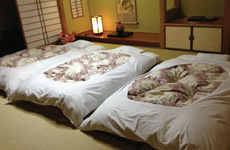
A Japanese-style room traditionally does not have a western-style bed, it is a tatami floor room with futon bedding. However, if you prefer a western-style bed, you may request one though we cannot guarantee it.
Please note: If you would like to request neighboring rooms next to your traveling companions, you and your traveling companions must have the same room types in order to be next to each other. For example, if you have requested a double room, but your traveling companions have requested a twin, or triple room, then neighboring rooms cannot be accommodated. However, if both you and your traveling companions match in room type, then neighboring rooms will likely be arranged for your convenience.
The Nakasendo, or "Central Mountain Path", is
a time-honored trail created during the Edo
period to link Tokyo (Edo) with Kyoto. Some
portions of the road are lost to time, but an
especially enchanting section of the trail
through the Kiso Valley still retains its traditional
character. This fully guided tour takes you from
Tokyo through that preserved section of the old
trail, before we go on to explore the walking
trails in Kyoto, Mount Yoshino, and Koyasan.
This tour is set during Japan's especially lovely
cherry blossom season, so you can expect to
see plenty of the beautiful pastel-pink blossoms
along the way. We start in Tokyo, with a day
walk around Asakusa, through Kappabashi
Kitchen Street (which includes Food Sample
Workshop), around Ueno to view the cherry
blossoms, before wrapping up in Yanaka. We
take a day in Matsumoto to see iconic
Matsumoto Castle and study the way of the
samurai with a special Samurai Experience,
before going to start the Nakasendo Trail.
We walk the Nakasendo for a total of 4 days,
starting with a brief walk from Kiso-Hirasawa to
Narai, where we enjoy a relaxing evening in an
onsen ryokan. The next day we take the Torii
Pass over to Yabuhara, where we will take a
short train to Kiso-Fukushima. On Day Three,
we take the Yogawa Michi path to the historic
village of Tsumago, where we rest up for Day 4:
the well-preserved route between Tsumago and
Magome. We travel from Magome to Kyoto for
two days of historic walks around the city, to
see some of the ancient city's most iconic
temples: the Golden Pavilion and it's shining
phoenix, Kiyomizu Temple's sacred springs,
Arashiyama Bamboo Grove, the thousand
gates of Fushimi Inari, Sannenzaka and
Ninenzaka, and the time-honored Gion Geisha
District. Nearby is Nara, where we see
magnificent Todaiji Temple, Kofukuji Temple,
and Nara Deer Park. While in these old cities,
we will enjoy a green tea ceremony, take a
calligraphy class, and study Zen meditation.
Then we spend a day walking the trails of
spectacular Mount Yoshino - considered by
some to be the top cherry blossom-viewing
spots in the country. Finally, we spend a couple
days at the Koyasan temple complex - the
heart of Japanese Buddhism's Shingon school.
We visit Koyasan's most prominent temple
buildings and walk a picturesque portion of the
Choishi Michi Pilgrimage Trail. Experience the
history and natural beauty of Japan in-depth
while walking the famous Nakasendo Trail, on a
delightful 2-week itinerary that includes
exploring Tokyo, Matsumoto, Kyoto, Nara, and
Koyasan. This tour is fully-guided by a friendly
and knowledgeable English-speaking hiking
guide. Please browse our detailed itinerary for
more information.
AJT makes itinerary planning simple: start with
one of our classic itineraries below and
customize it to suit your group. Our Japan tour
specialists will be happy to consult with you to
coordinate the best itinerary for your group.
Please feel free to
CONTACT US to get
started.
Please Note:
● The price depends on the group size and travel dates.
The larger the group size, the lower the cost per person.
Please
contact us. for more information.
● The
itinerary can be customized based on your group's
interests and budget, please
contact us to plan a perfect
vacation for your group to Japan.
We require US$200 deposit per person to hold the space at time of booking and the final payment is due 2 month prior to departure.
All entry fees to sites, activities listed in the itinerary
Transport
Travel by private coach between destinations, hassle free baggage handling.
Arrival Departure Airports
For arrivals at Narita Airport (NRT) or Haneda Airport (HND), this tour starts in Tokyo and ends in Osaka, with departures at Osaka Kansai Airport (KIX) or Itami Airport (ITM).
Vegetarian or special meals can be arranged.
Meet and Greet
Meet and greet and airport transfers on arrival and departure included
Click here for detailed itinerary
Tour schedule and prices subject to change without notice
You will be met at the arrival gate by an AJT representative holding an "All Japan Tours" sign.
Hotel Metropolitan Tokyo or similar class
In the morning, we take a walking tour around Tokyo, starting from Asakusa Sensoji Temple and the Nakamise District . Sensoji is Tokyo's oldest temple, and features the impressive Kaminarimon "Thunder Gate": flanked by two immense guardian deities and in which hangs an enormous red lantern. Nakamise is an outdoor street market, in which you'll find a broad variety of traditional goods, from colorful yukata to folding fans. We walk from there to Kappabashi Kitchen Street. Sometimes known as "Tokyo's Kitchen." Kappabashi is where the chefs and restauranteurs of the city go for kitchen wares and appliances, including food samples to display to customers. While here, participate in a Food Sample Workshop, where you can create your own colorful plastic food samples. From there, we walk to Ueno for the spectacular sight of Ueno Park's famous cherry blossoms. After, we make our way on foot to Yanaka, where the walking tour of Tokyo ends.
Hotel Metropolitan Tokyo or similar class
In the morning, we transfer to Matsumoto, onetime Edo-period castle town, now prominent city at the foot of the Japan Alps. Here, we immerse in the local samurai culture, starting with a visit to Matsumoto Castle - a national treasure of Japan and one of its most famous castles. The pitch-black exterior of this imposing keep has given it the name "Crow Castle". After, enjoy a Samurai Experience where you can swing a replica samurai sword, and learn an authentic samurai sword technique, in a friendly environment. After, we enjoy a relaxing evening in Matsumoto, before starting on the Nakasendo Road the next day.
Hotel Buena Vista or similar class
Today, we take a brief train ride from
Matsumoto for Kiso-Hirasawa to begin our walk
along the old Nakasendo Trail. The next four
days involve delightful walks through delightful
backcountry and charming little towns and
villages which have offered hospitality to
travelers on the old route for centuries. Our first
day's walk is a brief jaunt beginning in Kiso-
Hirasawa, going to Narai. Kiso-Hirasawa is
famous for its lacquerware industry, and
passing through town you are likely to see
shops selling this premium Japanese product.
Scarcely an hour away is Narai, which was
known during the Edo period as "Narai of a
thousand inns", as it was a prominent resting
spot during the Edo period. Much of its
traditional architecture has been well preserved
for you to admire. In the evening, we stay at a
traditional Japanese ryokan in Narai, just as so
many travelers did centuries ago.
Distance: 2.5 km / 2 mi
Time: 1 hour
Ascent / Descent: minimal
Oyado Iseya, or similar
Today, our path leads out of Narai, and up to
the Torii Pass. Here, the path becomes even
more wild - a narrow trail of dirt and stone
bordered on both sides by a dense forest of
bamboo, cedar, and cypress trees. It climbs a
mild ascent of 270 meters, before making a
sloping descent down, about 344 meters, to
Yabuhara - about a 3-hour hike. Upon arrival at
Yabuhara, we take a short train ride to Kiso-
Fukushima. We will walk from there to our
onsen ryokan accommodation, to enjoy a
relaxing soak in a traditional hot spring bath
and an evening of homegrown Japanese
hospitality.
Distance: about 6.5 km / 4 mi
Time: 3 hours
Ascent: 270 m / 885 ft
Descent: 344 m / 1,128 ft
Nukumori-no-Yado Komanoyu, or similar
In the morning, we take a short train ride to
Nojiri, and from there we enjoy a long hike
along the picturesque Yogawa-michi Road, on
the way to Tsumago. Yogawa-michi was never
officially a part of the Nakasendo, but served
the travelers of that time as a detour which they
took when the regular path was flooded. In that
way, it retains a more authentic character than
the actual Nakasendo section between Nojiri
and Tsumago, and offers hikers not only
charming countryside scenes, but a more
authentic historical experience. The road twists
and turns up and around hills thick with groves
of cypress and bamboo, the occasional house,
a bell for scaring away bears (which are rarely
seen these days), and Buddhist wayside
statues. We finally arrive in Tsumago, which
presents itself as a sort of lived-in open-air
museum, with traditional buildings
reconstructed of Japanese cypress. Upon
arrival in Tsumago, we make our way to the
evening's ryokan accommodation.
Distance: 15 km / 9 mi
Time: 5.5 hours
Ascent: 550 m / 1,800 ft
Descent: 723 m / 2,275 ft
Hanaya Tsumago, or similar
Today, we walk the most well-traveled portion
of the Nakasendo, from Tsumago to Magome,
which is often considered the most beautiful
section, for its balance of natural beauty and
historical atmosphere. Both of these towns
have a truly time-honored feel to them that
makes you feel as though you've stepped back
in time to the Edo period, with restored
classical wooden shops and residences. The
trail itself winds through the Kiso Valley and
takes about 3 hours, with only minor changes in
elevation, passing through splendid countryside
landscapes. The chief portion of this is
Magome Pass, when the Old Nakasendo veers
off of the main road and up into the woods,
passing an old teahouse, Buddhist lanterns,
and other little landmarks. Upon arrival, take
some time to explore the old village of Magome
and immerse in its time-honored atmosphere
before we transfer via train to Kyoto, through
Nakatsugawa and Nagoya.
Distance: about 8 km / 5.5 mi
Time: 3 hours
Ascent: 430 m / 1,410 ft
Descent: 326 m / 1,069 ft
Miyako Hotel Kyoto Hachijo or similar class
In the morning, we view one of Kyoto’s most coveted sights – the elegant Golden Pavilion. The temple’s shimmering 22-karat golden walls can be seen reflected in the Mirror Pond below, but don’t miss the dainty phoenix ornament sitting on the roof! Next, we visit Ryoan-ji Temple, a Zen Buddhist temple famed for its classical rock garden. Fifteen stones of varying sizes are arranged in a level sea of sand, surrounded by a raised wooden platform upon which guests are invited to sit and contemplate the garden’s meaning. The stones are cleverly placed so that, no matter where you sit, at least one stone is always hidden from view. Then we take a walk around Arashiyama, starting with Togetsukyo Bridge, which was originally built spanning the Hozu River hundreds of years ago. It’s now one of the best places to view the natural splendor of Arashiyama. From there, we go for a Kimono Experience, where you can try on and take pictures in an elegant traditional kimono. We continue on to Kameyama Park, a picturesque public park often missed by most visitors to Kyoto. Keep an eye out as you stroll the park; you may see wild monkeys while admiring the landscape. Then we walk through a nearby Bamboo Grove, where towering green stalks create an almost otherworldly feeling of awe and mystery as you walk the pathway through the center. After, we proceed to Tenryuji Temple, a fascinating Zen Buddhist Temple with a gorgeous traditional Japanese landscape garden that has survived in its original state for centuries.
Miyako Hotel Kyoto Hachijo or similar class
Today, we travel to Fushimi Inari Shrine – Japan’s chief shrine to Inari, the Shinto deity of economic prosperity, rice, and foxes. This shrine is famed for its hundreds of bright vermillion “torii” gates that form a long pathway around the shrine’s forest landscape; a scene that was made world-famous by the film “Memoirs of a Geisha”. Try to spot as many statues of the fox – Inari’s sacred messengers – as you can while you explore the shrine grounds. Next, we take a hike through Kyoto starting at Kiyomizu Temple. Also known as the Temple of Pure Water, Kiyomizu is a celebrated landmark famed for its iconic three-story pagoda and large wooden stage which offers dramatic views of the city, bordered by gorgeous cherry and maple trees. The trio of streams pouring from the base of the main hall are each believed to offer a different blessing – a long life, fortune in love, and success with studies. We proceed along the streets leading up to the temple, Ninenzaka and Sannenzaka, which are filled with preserved buildings that retain the character of the Edo period. Many of the buildings sell souvenirs and Kyoto-specific wares. Then we go to Kenninji Temple Tacchu Ryosokuin, which is considered Kyoto's oldest Zen temple. While here, we can experience the time-honored Green Tea Ceremony, a ritual of hospitality once afforded only to nobility. We can also learn Zen meditation, or “zazen”: a discipline practiced by Zen Buddhist monks to gain clarity of mind and insight into the nature of existence. From there, we make our way to Maruyama Park, which is one of the top spots in Kyoto to see beautiful cherry blossoms. One tree is especially famous – the Shidarezakura, or “weeping cherry tree”. We will end our day in the Gion Geisha District, where its streets are lined with ochaya (teahouses) – exclusive establishments where guests are entertained by Geisha and Maiko. Here, we will enjoy traditional Kyoto Cuisine in the company of an elegant Geisha.
Miyako Hotel Kyoto Hachijo or similar class
Today, we transfer to Nara to walk around the ancient city. We start from Nara Station, going to from there to Kaku to learn about Japanese Calligraphy, where you will learn to use the calligraphy brush to write Japanese characters on a sheet of white paper. We stroll from there over to Kofukuji Temple, which is home to a magnificent five-storied pagoda. We proceed from there to Isuien Garden - a picturesque landscape garden that uses nearby Todaiji Temple as "borrowed scenery" to add to its scenic beauty. Then we go over to Nara Deer Park, which sits outside Todaiji Temple. Nara Deer Park contains hundreds of friendly, wild deer that roam freely around the grounds. Special crackers can be purchased at stalls throughout the park for those wishing to feed the deer. Finally, we visit Todaiji Temple, one of Japan's most iconic Buddhist temples, housing an image of Rushana-butsu, who is called the "Cosmic Buddha".
Hotel Nikko Nara or similar class
In the morning, we transfer from Nara to enjoy a walk around stunning Mount Yoshino - considered one of Japan's most beautiful cherry blossom-viewing spots. We start at Yoshino Station, going up to the Hanayagura Observatory. Along the way, we stop at Kinpusenji Temple - a temple of the Shugendo religion, which combines elements of Buddhism with native Japanese Shinto. It's enormous Zao Hall is particularly impressive. We go from there to Yoshimizu Shrine, a historic Shinto shrine on Mount Yoshino with picturesque grounds. We go from there to Naka Senbon Park, which contains the "central thousand" of Mount Yoshino's cherry trees. We take a break here for a relaxing Hanami Picnic. A hanami is a traditional Japanese event where people gather in a group to enjoy the cherry blossoms together. Finally, we make our way to Hanayagura Observatory, which is by far the top spot to view the cherry blossoms, floating over Mount Yoshino like a blanket of fluffy pink clouds.
Hotel at Mt. Yoshino or similar class
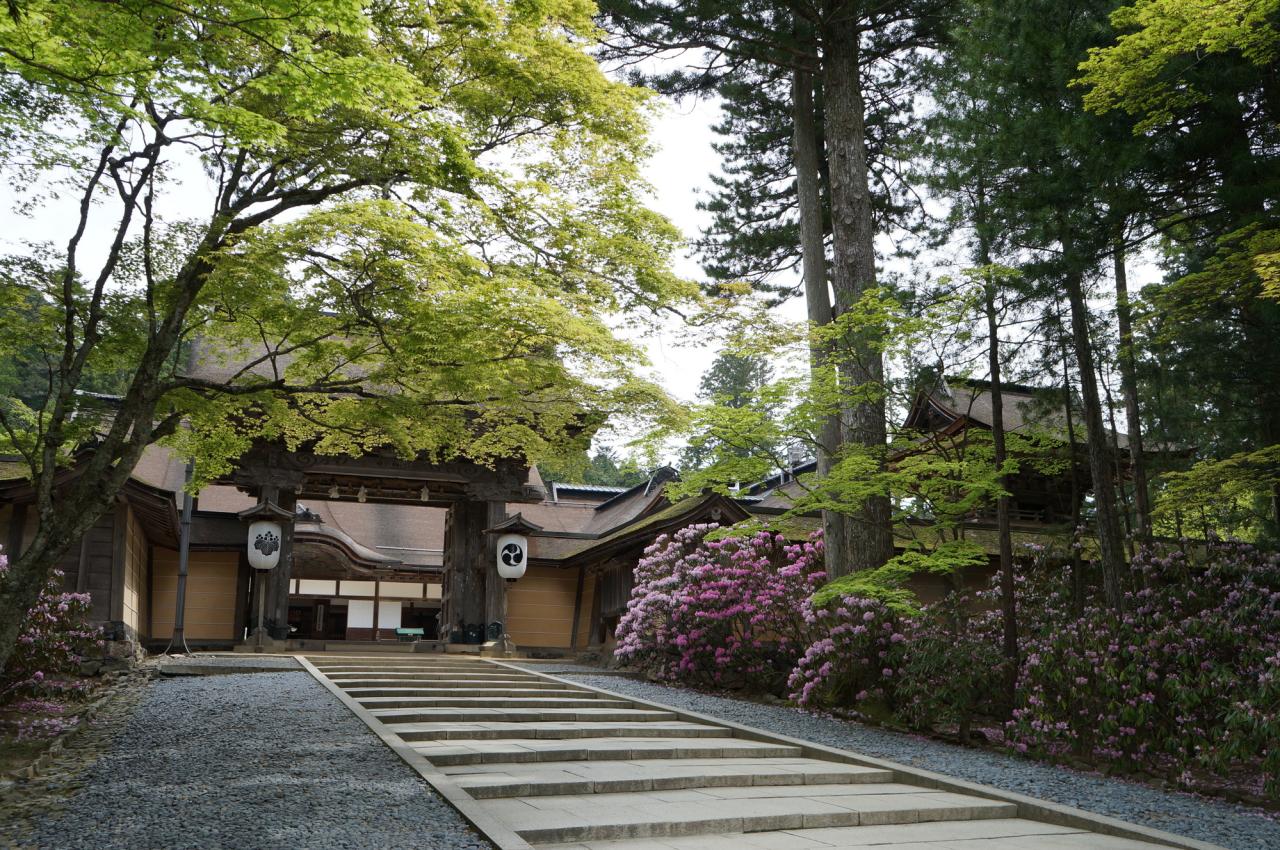
In the morning, we transfer from Mount Yoshino to Koyasan - a UNESCO World Heritage Site and one of Japan's most deeply spiritual places. We start with a tour of Kongobuji Temple, originally constructed by famed samurai general Toyotomi Hideyoshi before it was claimed as the ecclesiastical head temple of Koyasan. The temple’s classical, timeworn exterior hides rooms that have been elegantly painted, complete with gilded sliding doors. Behind the temple is the Banryutei, the largest rock garden in Japan, beautifully composed to represent dragons emerging from clouds in the sky. Proceed from there to the Danjo Garan, one of the most important sites of Koyasan, and its spiritual heart. Here is where Shingon founder Kobo Daishi first established the temple complex, beginning construction of the Garan’s stately vermillion pagoda and Golden Hall (called the “Kondo”). Then visit Okunoin Temple, which contains the mausoleum of Kobo Daishi, who founded the Shingon sect, and who is said to be waiting within in eternal meditation. The temple sits beside Japan’s largest, most beautiful cemetery, housing over 200,000 gravestones.
Fudo-in, Soji-in, or Ichijo-in (not Sekisho-in) or similar class
In the morning, walk the path from Kami-
Kosawa Station to the Daimon Gate - a part of
the Koyasan Choishi Michi Pilgrimage Trail.
Starting from Kami-Kosawa Station, you will
begin to feel the mystical atmosphere of
Koyasan as you hike the dirt paths through
dense forests of bamboo and cedar trees. We
will pass several of the stone posts and various
other historic structures marking the pilgrimage
path before reaching the Daimon Gate, which
sits at the entrance to the Koyasan temple
grounds. Upon arrival, we transfer from
Koyasan to Osaka for the final night of the tour.
Distance: 16 km
Time: About 5 hours
Mercure Tokyu Stay Osaka Namba or similar class
In the morning, our tour officially ends.
PLEASE NOTE: These are the hotels All Japan Tours generally uses on the touring styles and regions shown. There is no guarantee that you will stay in the lodgings listed on the website. We encourage you to check your travel documentation for confirmation of the exact accommodation you will be staying in.
Destinations
Tokyo / Matsumoto / Nakasendo / Nagoya / Kyoto / Nara / Mt Yoshino / Koyasan / Osaka
Lorem Ipsum is simply dummy text of the printing and typesetting industry. Lorem Ipsum has been the industry's standard dummy text ever since the 1500s, when an unknown printer took a galley of type and scrambled it to make a type specimen book.
Planned by experts, based on seasonal favorites and must-see sites.
Choose your style and split cost with other passengers
Chosen by our experienced staff
Guide is available to you 24/7 and sleeps in the same hotel
Learn to create your own Sushi, meet a geisha or maiko, and more
Meet locals and visit rural areas of Japan you might miss on other tours
| Group Tour Style | Budget | Deluxe | Deluxe-Plus | Signature | Active |
|---|---|---|---|---|---|
| < View Tours | < View Tours | < View Tours | < View Tours | < View Tours | |
| Feature | Our Budget Tours are designed for our guests who are on a limited budget. Explore the must-see sights and enjoy a hassle-free trip to Japan at an affordable price. | Sample all Japan has to offer, from unique locales to must see tourist attractions. Our Deluxe Tours are fully guided, and use our luxury coaches for your convenience and comfort. | Experience Japanese culture at a slower pace, and with a smaller group size than our deluxe tours. Stay in each city longer so you can soak in the culture and fully appreciate the destinations. | Enjoy upgraded hotels, a slower pace, and a smaller group size for a more intimate experience. Access to a wide range of unique activities that immerse you in authentic Japanese culture. | Explore Japan off the beaten path via Japanese public transportation, walking, hiking, cycling and more. Take more time to enjoy local experiences and picturesque landscape. |
| Advantage | Our most cost-effective way to see the highlights of Japan while staying in budget-friendly accommodations. If you would like to have a set of quick stops to sample the must-see sights of Japan, or if you plan to explore Japan on your own but would like to take a short trip to learn about Japan before your self-guided journeys, these are the tours for you. | Our most popular tours for everyone. Fully-escorted - the most hassle-free way to visit Japan for the best value. From Hokkaido to Kyushu, the duration of our Deluxe Tours range from 5 to 27 days. Whether you want to see the best of Japan in a shorter time, or take your time in each city, you will find a tour package that suits your preferences. | Smaller group sizes enable our guests to access more of Japanese culture and traditions. Our Deluxe-Plus Tours are carefully balanced for you to discover the unique Japanese culture, history, arts, food and spectacular scenery Japan has. If you love Japan and want to appreciate the best of everything Japan can offer, these are the tours for you. | Dive into the cultural aspects of Japan at a more leisurely pace. Enjoy more than just sightseeing. All of our Signature Small Group Tours feature a wide range of cultural experiences through interaction with the people and places that represent all that is authentic about the destination. Get an alternative, more in-depth understanding of Japanese culture and art. | Our Active Small Group Tours combine the best cultural locations with off-the-beaten-path destinations via Japanese public transportation. Discover the country of Japan the way the locals do and see Japan from a different angle. A focus on getting away from the crowds and into the real Japan, see the diversity of Japan’s countryside unfold before your eyes. |
| Group Size | 20 to 45 people | 10 to 35 people | 6 to 24 people | 4 to 16 people | 4 to 13 people |
| Fully-escorted | Comprehensively escorted by AJT's professional English speaking tour guide | Your guides are local experts and residents of the city you are visiting, they do not always escort the group when traveling between cities | |||
| Pace | Fast pace to see as much as possible while in Japan | Perfect pace to see as much as possible while in Japan | More leisurely pace to soak in and fully appreciate the destinations, plus free time to explore on your own | ||
| Airport Transfers | Airport transfers are NOT included unless otherwise specified | Airport transfers are included* (If no options are taken: hotels are not requested to be changed and passengers use the correct airports) | Airport transfers are included if arriving on the first day of the tour and returning on the last day of the tour | Private airport transfers are included if arriving on the first day of the tour and returning on the last day of the tour | Airport transfers are NOT included unless otherwise specified |
| Transfer between cities | Transfer between cities via private coach and Shinkansen (bullet train), depending on the itinerary | Transfer between cities via private coach and first class Shinkansen (bullet train), depending on the itinerary | Transfer between cities via Shinkansen (bullet train) or express train. Private minivans are also used occasionally where public transport is not available or practical | ||
| Sightseeing | Sightseeing by private coach with an escorted guide | Sightseeing by private coach and public transportation with an escorted guide | Sightseeing via public transportation (local train, subway & local bus) with local guides | ||
| Admission fees and activities | All entry fees to sites and activities listed in the itinerary are included | ||||
| Luggage Transfers | Luggage transfers by private coach from hotel to hotel, plus separate luggage transfers are included on select tours | Separate luggage transfers are included | |||
| Meals | Breakfast every morning, plus meals as indicated (vegetarian or special meals can be arranged) | ||||
| Accommodation | Carefully-selected budget hotels and ryokans | Carefully-selected superior/deluxe hotels and ryokans | Carefully-selected deluxe/boutique hotels and ryokans | Carefully-selected deluxe/luxury hotels and ryokans | Accommodations range from local Japanese inns (minshuku) to budget hotels, to superior/deluxe hotels depending on the tour and destination |
| Ages | 4 years old and above | 6 years old and above | |||
| Health & Activity | In order to enjoy our tour, you should be able to walk reasonable distances, often over unpaved and uneven surfaces. Some of the most memorable sightseeing activities can only be accomplished on foot. Wheelchairs can be arranged upon request. However, we regret that we’re unable to provide individual assistance to guests with walking difficulties or other personal needs. Guests requiring such individualized assistance must be accompanied by an able-bodied companion who can provide it. | These tours are tailored to the energetic traveler; guests should feel comfortable walking from 4 to 10 miles a day depending on the tour and destination. | |||